
Singapore’s economic resilience is not a coincidence. It is engineered, in large part, by two sovereign wealth funds that together manage an estimated combined portfolio exceeding S$2 trillion. Temasek Holdings and the Government of Singapore Investment Corporation (GIC) are distinct entities with separate mandates, yet they share a common mission: to secure the city-state’s financial future through disciplined global investing. As capital flows shift in 2026 amid geopolitical realignments and the energy transition, their investment choices offer a masterclass in sovereign portfolio management.
The Dual‑Engine Architecture
Understanding Singapore’s approach requires abandoning the idea of a monolithic national wealth fund. Temasek is an investment company that owns assets directly, behaving like an active equity investor. Its net portfolio value stood at S$389 billion as of 31 March 2025, according to the Temasek Annual Review 2025, with a one-year total shareholder return of -5.07% reflecting a difficult year for Asia‑listed equities. GIC, conversely, is a global investment firm tasked with preserving and enhancing Singapore’s foreign reserves. It does not disclose its absolute portfolio size but reveals a 20‑year annualized real return of 3.9% above global inflation, per the GIC Report 2024/25 published in July 2025. These figures underscore a deliberate separation: Temasek can afford short‑term volatility in pursuit of transformational stakes, while GIC operates on a multi‑decade horizon, protecting purchasing power.
A Tale of Two Mandates, One Coherent Strategy
Temasek’s portfolio is built around four structural trends—digitization, sustainable living, future of consumption, and longer lifespans. Over the past year, it ramped up exposure to U.S. and Indian technology companies while trimming China‑focused positions to manage regulatory risk. GIC, meanwhile, has deepened its allocation to private equity, infrastructure, and real estate, which now represent 17% of its total portfolio. The fund’s 2025 report highlighted significant commitments to logistics properties in Europe and renewable energy platforms in North America, reflecting a belief that inflation‑linked cash flows will outperform in the current macro environment.
This division creates a virtuous cycle. Temasek’s liquid holdings can be monetized to fund the national budget directly via dividends. GIC’s mandate, however, prohibits distributions to the government; its returns accumulate as official reserves, providing a cushion against crises. In practice, Singapore taps Temasek for social spending—its dividends contributed over S$10 billion to government coffers in recent years—while relying on GIC’s compounding strength to backstop the Singapore dollar and maintain AAA sovereign ratings.
Global Footprint and Sectoral Bets
Both funds have aggressively moved beyond public markets. Temasek’s unlisted assets accounted for 52% of its portfolio in 2025, up from 27% a decade earlier. It has co‑invested with BlackRock in the Global Decarbonization Partners fund, channeling capital into green hydrogen and battery storage startups. GIC has become one of the world’s largest infrastructure landlords, co‑owning the Italo high‑speed rail operator in Italy and investing in digital infrastructure such as Vantage Data Centers. A noteworthy 2026 live data point confirms this trajectory: GIC’s latest long‑term return of 3.9% was supported by strong gains in private market assets, as detailed in the official GIC Report 2024/25 (https://www.gic.com.sg/newsroom/), proving that patient capital wins over cycles.
Geopolitical Agility as an Investment Edge
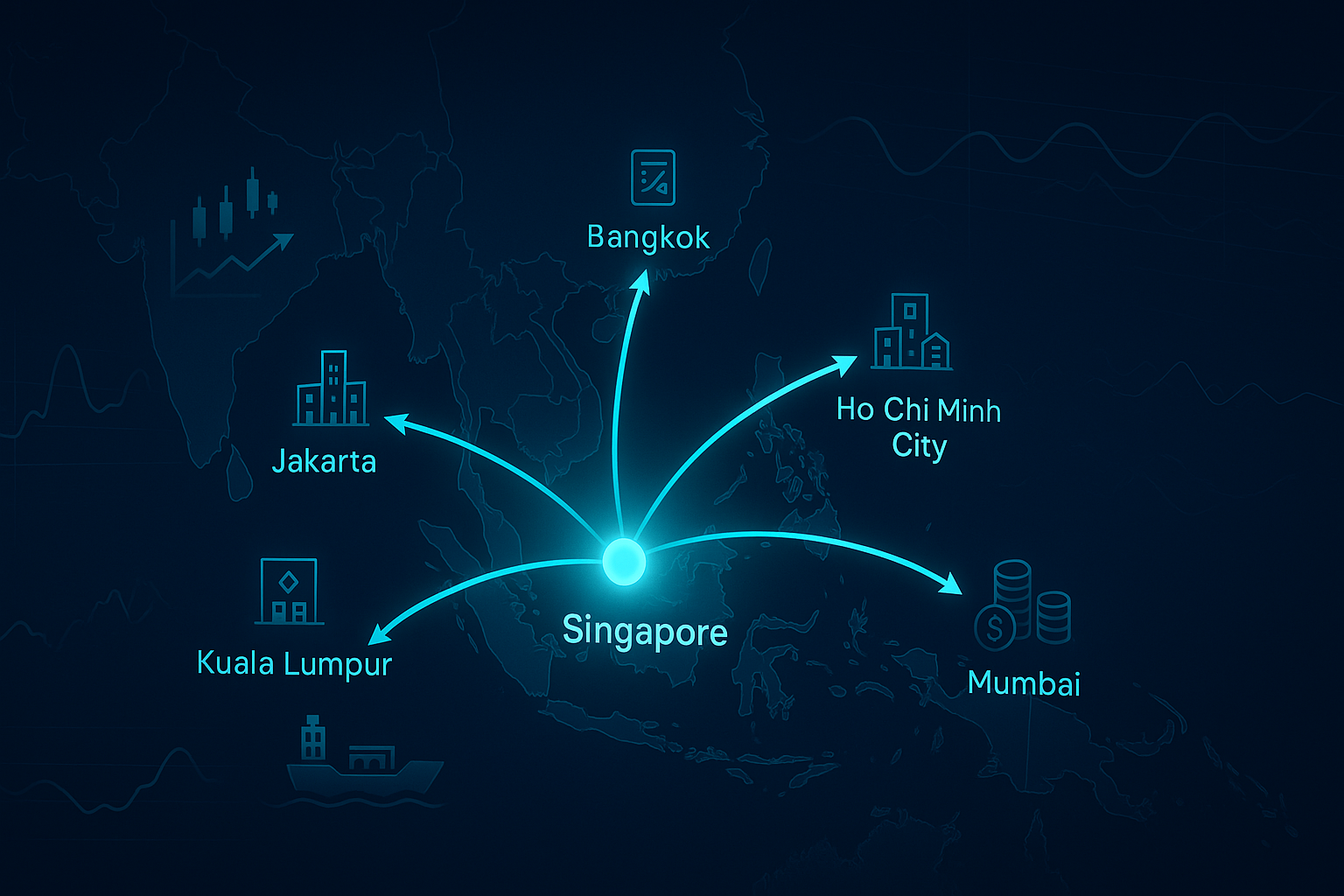
In an era of decoupling, Temasek and GIC have perfected a “multi‑node” strategy. Temasek’s U.S. exposure has surpassed its China exposure for the first time, while GIC continues to hold over one‑third of its portfolio in the United States. At the same time, both funds are scaling up in India, Southeast Asia, and Latin America to capture demographic dividends. The ability to pivot without signaling panic—rooted in Singapore’s non‑aligned diplomatic stance—allows them to access deals that politically sensitive investors might avoid.
By design, Singapore’s sovereign wealth ecosystem is a hedge against national vulnerability. It transforms the absence of natural resources into a durable competitive advantage, proving that intellectual and financial capital, when governed with independence and professionalism, can match any resource endowment.