
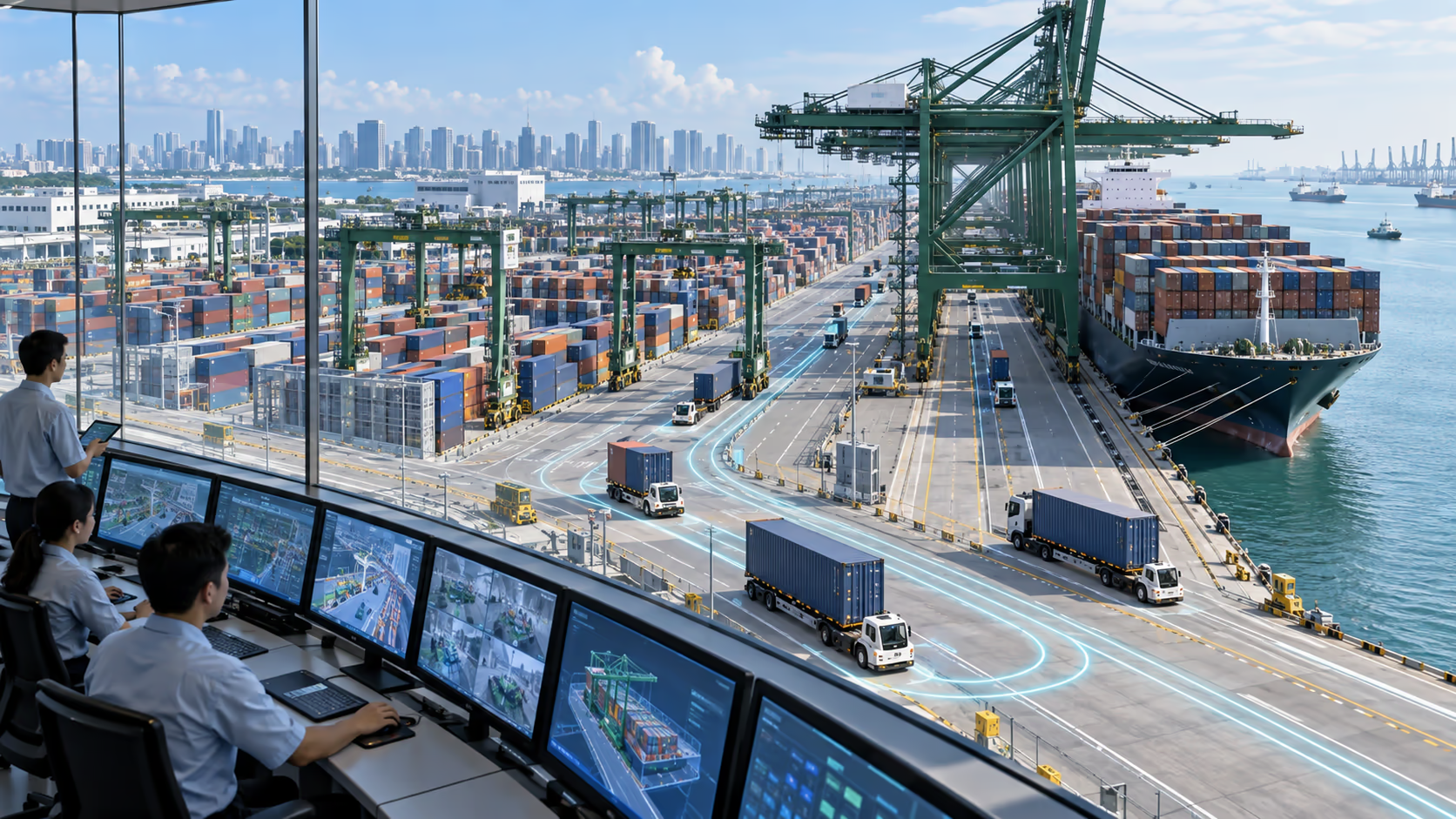
The Port of Singapore, consistently ranked among the world’s busiest transshipment hubs, faces an age-old problem: space. With limited land mass and increasing vessel sizes, the efficiency of the container yard is the linchpin of the entire maritime ecosystem. In 2026, a new wave of Singapore-based digital startups is changing the game, moving beyond traditional Terminal Operating Systems (TOS) to deploy hyper-intelligent AI solutions that predict and manage the flow of metal boxes with unprecedented precision.
The Shift from Static Planning to Dynamic Prediction
Historically, yard planning relied on static rules and human experience. However, the volatility of global shipping—exacerbated by weather anomalies and geopolitical shifts—demands a fluid approach. Startups like Portcast and Greywing (which has a significant Singapore footprint) are utilizing machine learning algorithms that ingest data from AIS (Automatic Identification Systems), weather forecasts, and trucking schedules to predict vessel arrival times down to the minute.
The key innovation is not just knowing when a ship arrives, but understanding how that arrival affects the “container shuffle.” When a vessel berths late, the export containers stacked beneath import boxes create a “re-handling” nightmare. New AI models simulate millions of stacking scenarios in milliseconds to suggest the optimal position for every container as it enters the gate.
Reducing Carbon Footprints through Optimization
The environmental impact is a major driver for this digitalization wave. According to a 2026 report by the Maritime and Port Authority of Singapore (MPA), intelligent yard management can reduce terminal tractor mileage by up to 20%. By ensuring that trucks are routed to pick up containers that are stacked on the top of piles, startups are eliminating unnecessary movement.
A prime example is the implementation of “Digital Twin” technology at the Tuas Mega Port. Startups are creating virtual replicas of the physical yard. Operators can test “what-if” scenarios—like a sudden surge in empty container returns—in the digital world before committing resources in the real world. This data-driven approach ensures that peak hours are managed without the gridlock that plagued older terminals. For specific data on the expansion and digitalization of the port, the official MPA website offers insights into the Tuas Port development and its smart infrastructure goals: https://www.mpa.gov.sg/port-marine-ops/tuas-port.
Integration with Ground Transportation
The yard is not an island; it is the middleman between sea and land. Startups are now bridging the gap between the quay crane and the trucking chassis. Platforms are emerging that allow haulers to book specific time slots based on real-time yard congestion data. This “Just-in-Time” trucking model prevents the long queues of idling diesel trucks that were once a staple of port gates. By synchronizing the arrival of trucks with the readiness of the container, these digital tools are smoothing the entire supply chain interface.
The Human Element
Despite the heavy focus on AI, the role of the human operator is evolving, not disappearing. Control room staff are transitioning from giving manual instructions to monitoring AI recommendations. This allows a single planner to manage a much larger yard area, addressing the labor shortage that has long plagued the maritime industry. The startups winning the market are those providing intuitive dashboards that allow veterans to trust the machine’s logic.
As Singapore pushes toward its goal of handling 65 million TEUs annually, the smart yard is no longer a luxury; it is a necessity. The startups enabling this transformation are positioning the nation as the global benchmark for intelligent logistics infrastructure.