
A Market Defying Cost Pressures
Singapore’s foodservice sector has entered 2026 with remarkable momentum despite persistent headwinds. The market is projected to grow from USD 28.92 billion in 2025 to USD 34.24 billion in 2026, with forecasts reaching USD 79.73 billion by 2031 at an 18.42% compound annual growth rate. That expansion is unfolding against a backdrop of high rents, labour shortages, and rising input costs — conditions that have forced more than 3,000 F&B outlets to close in 2024 alone and approximately 300 closures per month throughout 2025.
Yet new entrants keep arriving. The simultaneous pattern of closures and openings reveals something important: Singapore’s F&B market is not contracting — it is re-sorting. Capital continues to flow into formats that match shifting consumer behaviour, while operators relying on undifferentiated mid-market positioning face the sharpest pressure.
The Selective Splurging Phenomenon
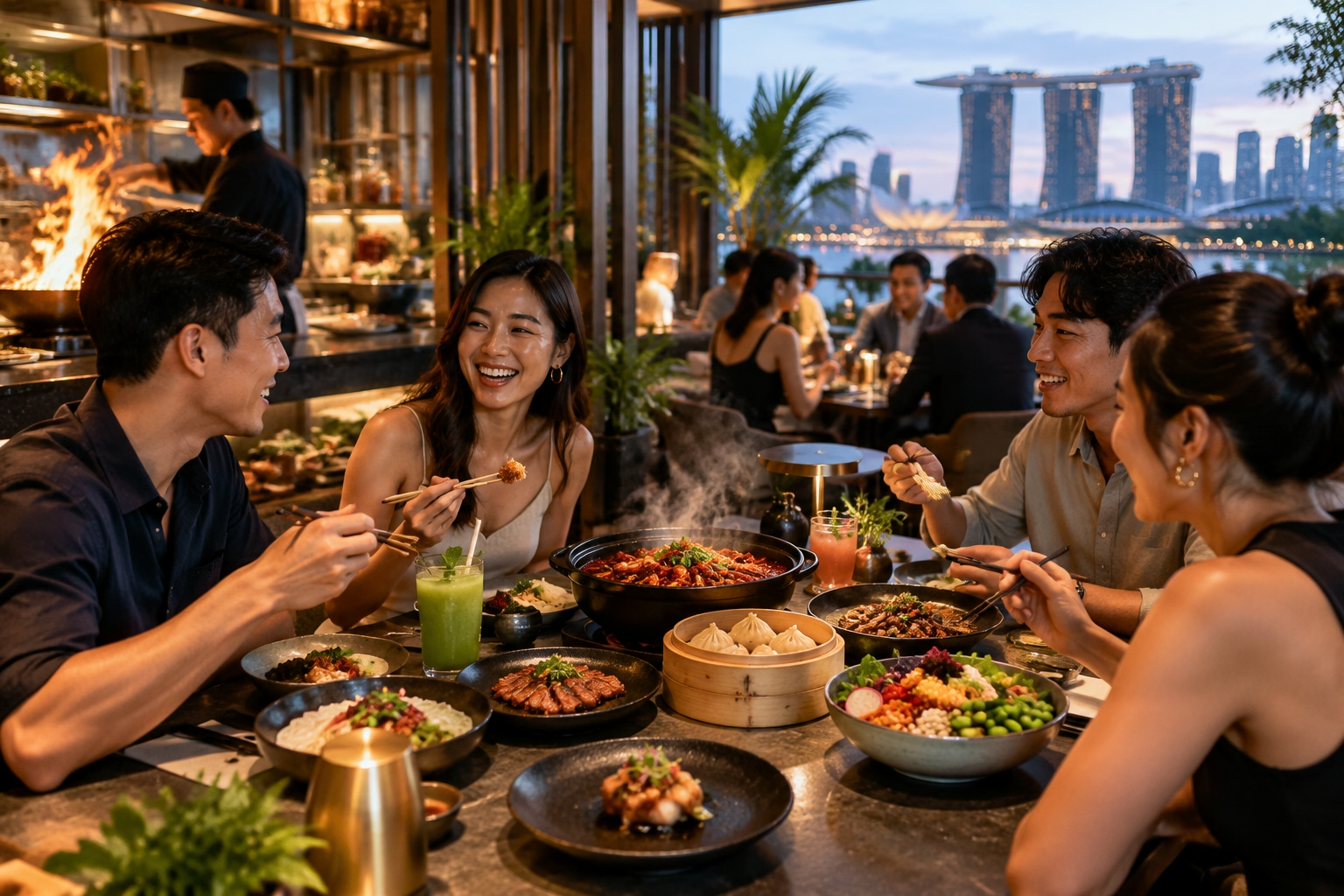
Consumer spending in late 2026 reflects what industry analysts call “selective splurging.” Diners are not spending less overall; they are spending more deliberately. Traditional mid-tier mass-market dining and generic food courts have contracted, with the Restaurant Association of Singapore recording a 5.3% year-on-year drop in that segment. In their place, two formats are pulling ahead: “casual luxury” — intimate, high-quality dining without white-tablecloth formality — and hyper-efficient convenience concepts.
This bifurcation creates a specific opportunity for entrepreneurs. The middle ground is being punished, but the extremes are rewarding operators who commit fully to either value-driven authenticity or operational efficiency.
Government Support Reshaping the Playbook
Singapore’s government has responded with targeted support programmes that directly benefit food entrepreneurs. The Healthier Dining Programme now offers up to $40,000 in grants and funding for F&B businesses that incorporate healthier menu options, including a $30,000 Healthier Dining Grant for marketing and a $5,000 Innovation Grant for recipe reformulation. The programme has already expanded healthier food availability more than tenfold since 2014, spanning over 300 brands and 2,600 touchpoints.
For larger-scale innovation, the government has allocated $70 million from April 2026 under the second tranche of the Agri-Food Cluster Transformation Fund, supporting technology adoption and local agricultural capacity. These are not marginal subsidies — they represent structural incentives that reward entrepreneurs aligned with national food security and public health priorities.
Tourism as a Demand Multiplier
Tourism remains a critical demand source. Singapore welcomed approximately 16.5 million international visitors in 2024, a 21% year-on-year increase, with dining expenditure capturing a substantial share of tourism revenue. Hotel dining, airport F&B, and destination restaurants have benefited directly. For entrepreneurs, this means that location strategy — proximity to tourist flows, transport nodes, and integrated resorts — remains as important as menu innovation.
The data is clear: Singapore’s F&B market is growing, but the growth is selective. Entrepreneurs who align with government-supported categories, target the casual luxury or hyper-convenience segments, and design for tourism-adjacent locations are finding the most viable pathways.