
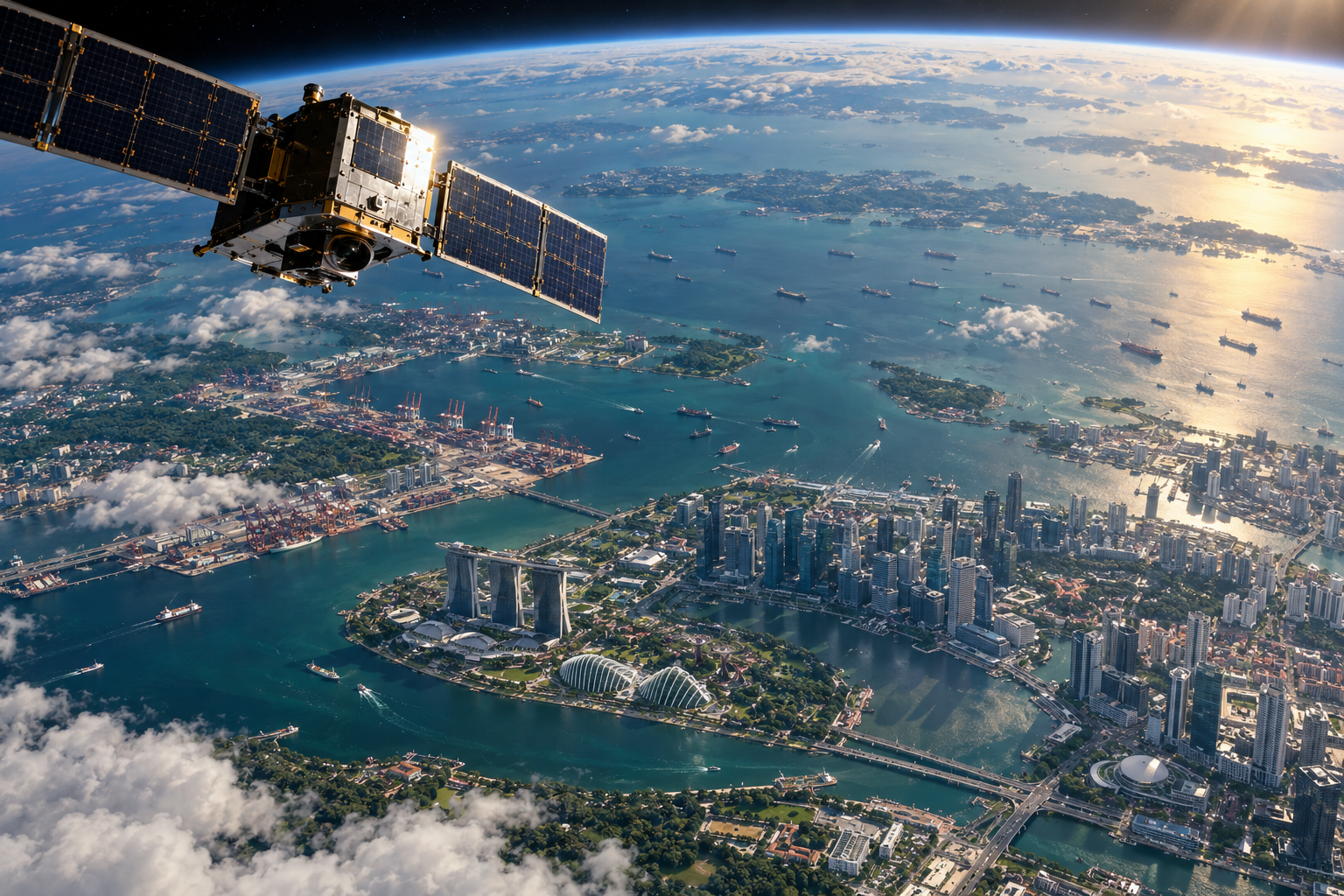
Singapore is strengthening its position in the global space economy as satellite technology, artificial intelligence and Earth observation services create new commercial opportunities in 2026. The city-state is increasingly moving beyond traditional aerospace activities toward developing specialised satellite systems, processing geospatial information and delivering space-enabled services to regional industries.
For technology entrepreneurs, this transition offers opportunities that do not necessarily require building rockets or operating an entire satellite constellation. Startups can participate through sophisticated sensors, communications equipment, satellite software and data analytics platforms serving customers across Southeast Asia.
Singapore Establishes a National Space Agency
A significant development occurred on April 1, 2026, when the National Space Agency of Singapore (NSAS) officially began operations, taking over the responsibilities of the Office for Space Technology and Industry.
The agency is responsible for developing national space capabilities, supporting industry development and strengthening international partnerships. It also plans to advance space regulations and improve the management of satellite operations.
According to the National Space Agency of Singapore’s 2026 industry overview, Singapore has approximately 70 space companies and around 2,000 professionals and researchers working across the sector.
These figures illustrate an established ecosystem covering satellite manufacturing, engineering, communications and downstream services rather than an industry dependent on a single major aerospace corporation.
Satellite Data Creates Opportunities Beyond Space Manufacturing
Earth observation is one of the most commercially relevant segments for Singaporean startups.
Satellite imagery can help governments monitor coastal developments, assess flood risks, identify changes in agricultural land and track maritime activities. Companies can transform this information into subscription-based dashboards or specialised intelligence products.
Singapore’s NeuSAR radar satellite programme demonstrates the practical value of remote sensing. Synthetic aperture radar technology can collect imagery at night and through cloud cover, making it particularly useful in tropical regions.
Startups developing analytics software could combine radar information with artificial intelligence and historical geographic datasets to support insurance companies, shipping operators and environmental consultants.
AI-Powered Satellites Expand Commercial Possibilities
In February 2026, Nanyang Technological University announced three projects designed to validate emerging space technologies.
One project involves a nanosatellite developed with Satoro Space that will test onboard AI processing, allowing satellite images to be analysed before transmission to Earth.
This approach could reduce communication requirements and improve the speed at which useful information reaches customers.
Other projects involve propulsion technology developed by Aliena and optical imaging equipment from LightHaus Photonics, highlighting opportunities for specialised Singaporean engineering companies.
Government Support Helps Startups Test New Technologies
Singapore’s Space Technology Development Programme provides mechanisms supporting technology development, prototype validation and access to testing opportunities in orbit.
By 2025, S$210 million had been secured for space technology innovation, with the programme continuing to support research and development under its updated framework.
For early-stage businesses, this ecosystem can reduce some technical barriers associated with developing space-qualified products. However, funding remains competitive, and satellite testing involves demanding reliability requirements.
Commercial Growth Will Depend on Practical Applications
Singapore’s greatest opportunity may lie in converting satellite capabilities into products that solve measurable business problems.
Startups must demonstrate reliable data quality, affordable service delivery and clear customer demand. Partnerships with research institutions, satellite operators and regional businesses will also remain important.
As space technology becomes more accessible, Singapore’s combination of advanced engineering, AI expertise and financial connectivity could help local companies serve a much larger Asia-Pacific market.