Singapore has long been recognized as one of Asia’s most resilient real estate markets. Despite its small land area, the city-state has built a property sector that remains attractive to both domestic and international investors. The appeal comes from several factors working together: political stability, strong legal protection, transparent regulations, high-quality infrastructure, and a steady role as a global financial and business hub. For investors seeking a market that combines capital preservation with long-term growth potential, Singapore’s real estate sector continues to stand out.
One of the biggest reasons the market remains active is the limited supply of land. Singapore cannot expand geographically in the same way larger countries can, so land scarcity naturally supports property values over time. At the same time, demand remains healthy because the country continues to attract multinational companies, skilled expatriates, entrepreneurs, and affluent individuals. This constant demand for residential, commercial, and industrial space helps maintain the relevance of real estate as an investment class.
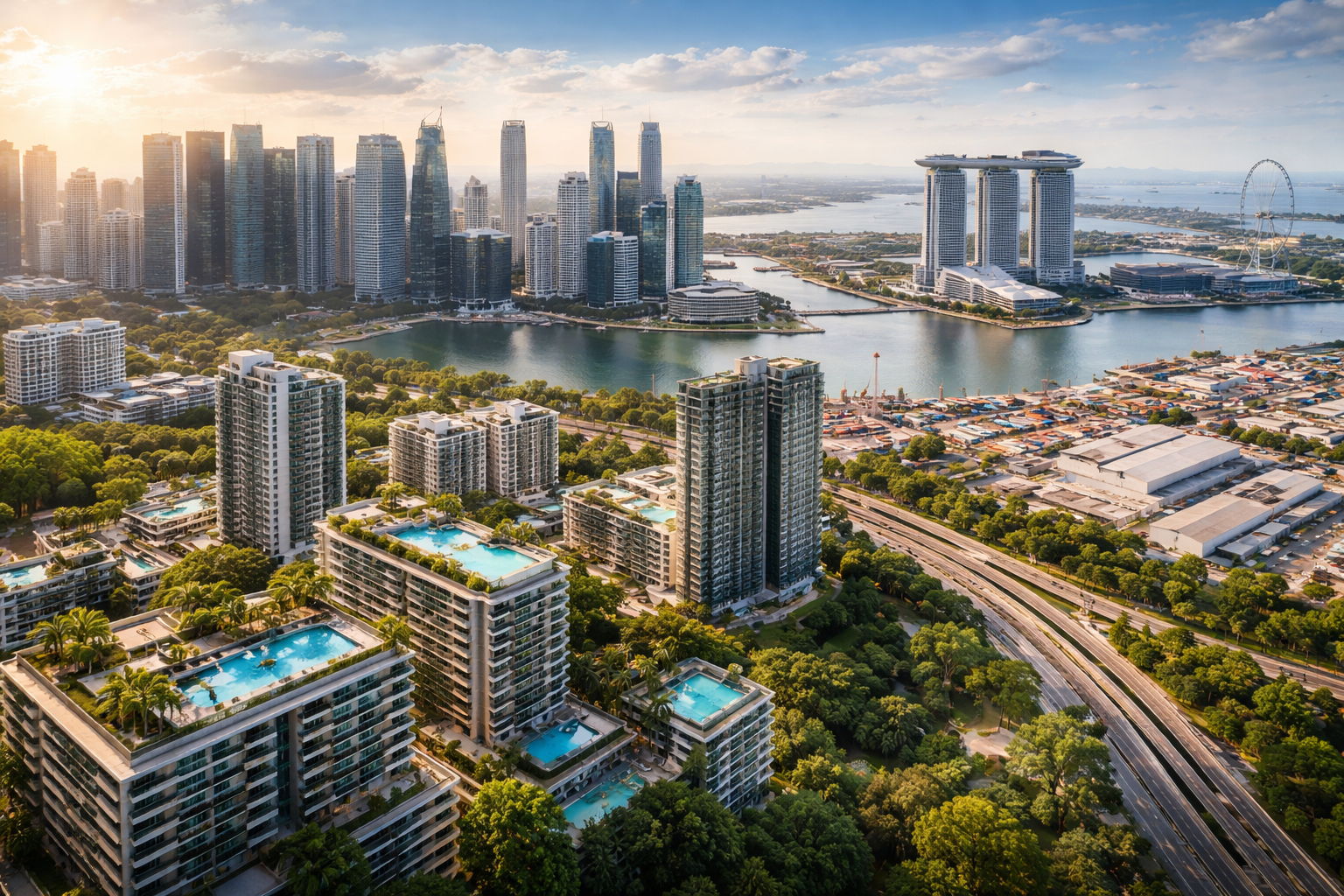
The residential segment is often the first area investors consider. Private condominiums, landed homes, and luxury apartments in prime districts are seen as premium assets, particularly among high-net-worth buyers. Beyond the luxury market, suburban developments also draw interest because of changing lifestyle patterns, improved transport links, and the desire for well-connected communities outside the city center. Rental demand in residential property can also be supported by expatriate professionals and local households upgrading their living standards. However, investors must study cooling measures, buyer stamp duties, and financing rules, since Singapore’s government actively manages housing affordability and market stability.
Commercial real estate is another major component of Singapore’s property landscape. Office buildings in the Central Business District remain valuable because Singapore serves as a regional headquarters location for many international companies. Even though flexible work arrangements have changed office usage, prime office assets still benefit from prestige, location, and quality tenants. Retail properties, on the other hand, have evolved with consumer behavior. Malls and retail spaces integrated with transport hubs, offices, and residential developments tend to perform better because they capture constant foot traffic and serve mixed-use communities.
Industrial and logistics real estate has also become increasingly important. Singapore’s role in global trade, shipping, warehousing, and advanced manufacturing creates demand for business parks, data centers, logistics facilities, and specialized industrial space. As e-commerce, digital infrastructure, and supply chain modernization continue to develop, these segments may provide investors with diversified opportunities beyond traditional homes and offices. In recent years, data center demand has been especially noteworthy because of Singapore’s importance in regional connectivity and digital services.
Another strength of investing in Singapore property is the regulatory environment. The government is known for balancing growth with discipline. Policies are designed not only to encourage investment, but also to reduce speculation and prevent severe market distortions. While this can limit rapid short-term gains, it often supports a healthier long-term market. Investors who prefer stability over volatility often view this as a major advantage.
Still, entering the market requires careful planning. Property prices in Singapore are among the highest in the region, which means the barrier to entry can be significant. Foreign buyers also face additional taxes and ownership restrictions in certain categories. Yields may not always appear as high as in emerging markets, but many investors accept this trade-off in exchange for stronger asset security, lower political risk, and a more mature legal system.
For a well-prepared investor, Singapore offers more than simple property ownership. It offers participation in a sophisticated urban economy where real estate is closely tied to finance, trade, technology, and long-term national planning. That combination is what keeps the sector growing and relevant even in a changing global environment.