
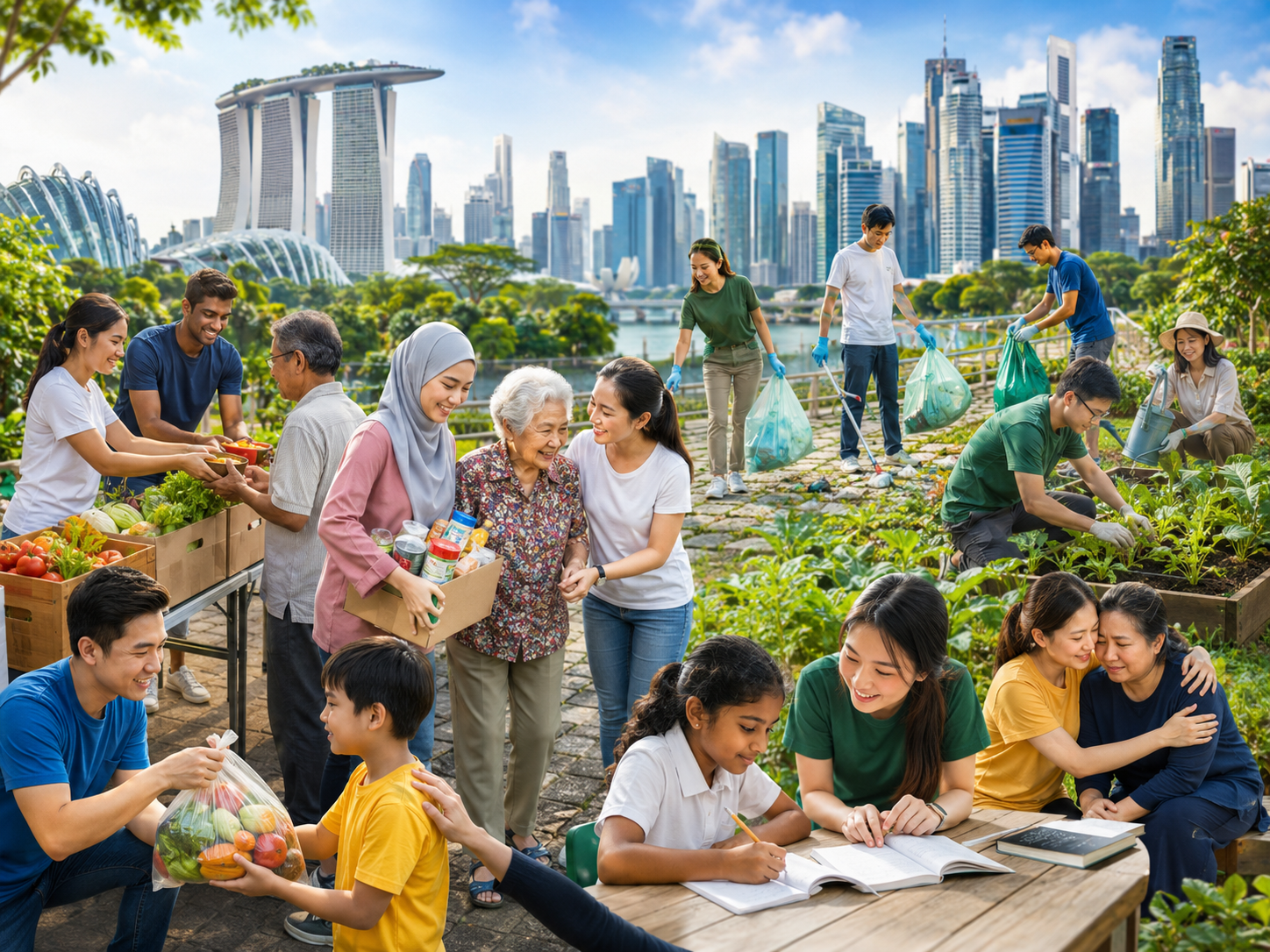
Non-profit organizations play a vital role in Singapore’s social and environmental development. Although Singapore is known for its strong economy, efficient governance, and high standard of living, the country still faces complex challenges such as income inequality, an ageing population, mental health concerns, migrant worker welfare, food insecurity, and environmental sustainability. Non-profit organizations help fill important gaps by providing direct assistance, raising public awareness, and mobilizing communities to support long-term change.
One of the most important contributions of non-profit organizations in Singapore is their support for vulnerable groups. Many families and individuals continue to struggle with financial pressure, even in a developed economy. Non-profits provide food aid, financial support, counseling, education assistance, and job-readiness programs. These services are especially important for low-income households, single-parent families, persons with disabilities, and elderly residents who live alone. By working closely with communities, non-profits are often able to identify needs quickly and provide personalized support that larger institutions may find difficult to deliver.
Non-profit organizations also play a significant role in supporting Singapore’s ageing population. As life expectancy rises, more elderly citizens require healthcare support, social interaction, mobility assistance, and emotional care. Many organizations run senior activity centers, home-visit programs, befriending services, and wellness initiatives. These programs reduce isolation and help seniors remain active members of society. Beyond material support, non-profits provide dignity and companionship, which are equally important in improving quality of life.
Another area where non-profits make a strong impact is mental health. In recent years, mental well-being has become a more openly discussed issue in Singapore. Non-profit groups provide counseling, crisis support, youth outreach, public education, and safe spaces for people experiencing stress, anxiety, depression, or trauma. They also help reduce stigma by encouraging conversations about emotional well-being. This is especially valuable for students, workers, caregivers, and marginalized communities who may hesitate to seek formal help.
Environmental non-profits are equally important in Singapore’s journey toward sustainability. As a small and highly urbanized nation, Singapore faces environmental pressures related to waste, carbon emissions, biodiversity loss, and limited natural resources. Environmental organizations promote recycling, responsible consumption, wildlife protection, marine conservation, and climate education. Some groups organize clean-up drives, tree-planting activities, workshops, and campaigns to encourage citizens to reduce plastic use and conserve energy. Their efforts help turn sustainability from a government policy into a shared community responsibility.
Non-profit organizations also act as bridges between citizens, businesses, and the government. In Singapore, collaboration is essential because social and environmental problems are often interconnected. For example, food rescue organizations can reduce food waste while also feeding low-income families. Skills-training programs can improve employment opportunities while strengthening social mobility. Environmental education can encourage schools, companies, and households to adopt greener habits. Through partnerships, non-profits multiply their impact and create practical solutions that benefit different parts of society.
Volunteerism is another key element of the non-profit sector. Many Singaporeans contribute time, skills, and resources to support causes they believe in. Volunteers help distribute meals, mentor children, visit seniors, conduct workshops, manage events, and support environmental projects. This culture of giving strengthens social cohesion and reminds people that national progress is not only measured by economic growth but also by compassion and responsibility.
The work of non-profit organizations in Singapore shows that social and environmental well-being require continuous effort from all sectors of society. By supporting vulnerable communities, protecting the environment, promoting awareness, and encouraging civic participation, non-profits help build a more inclusive, caring, and sustainable Singapore.