
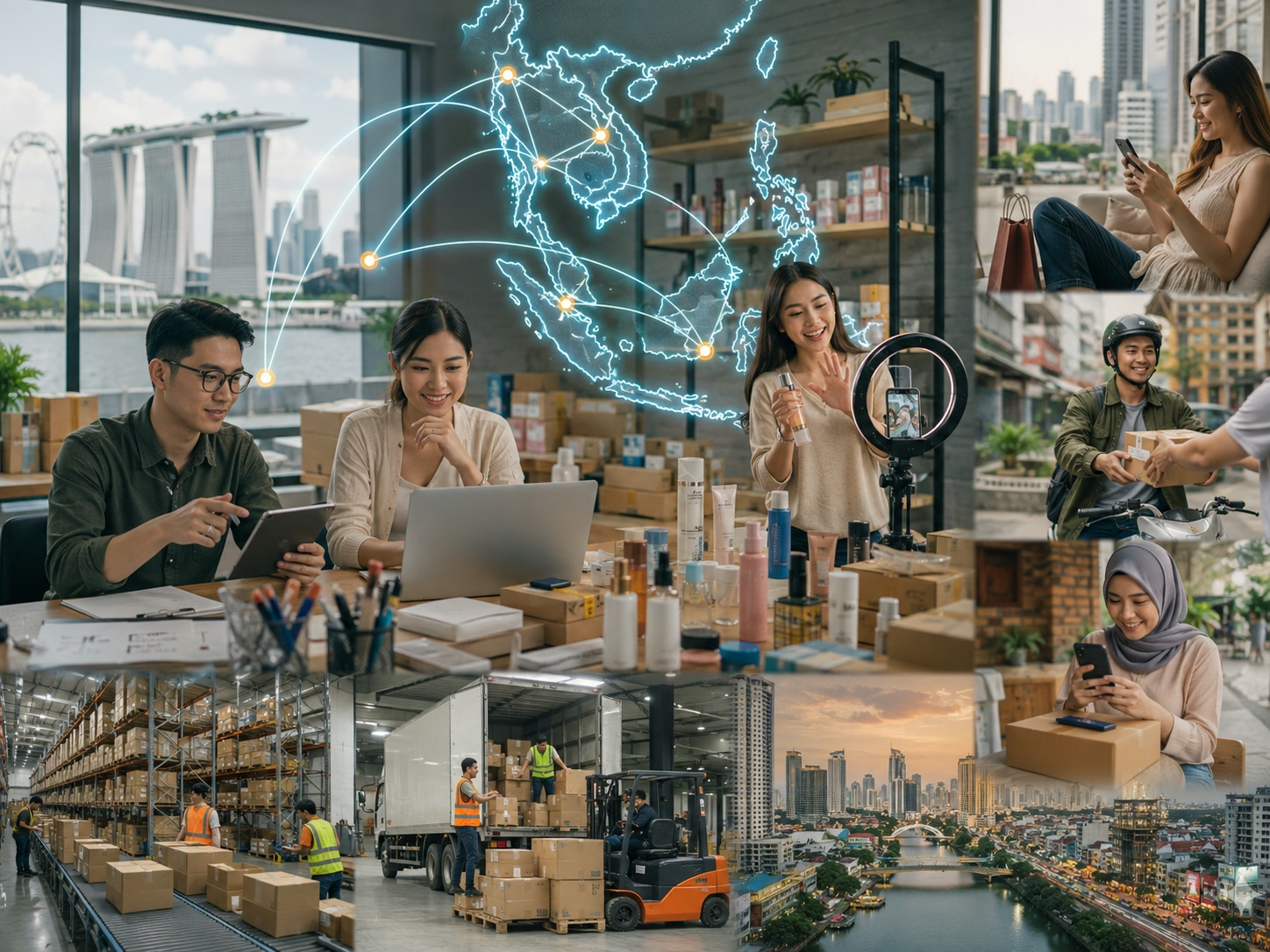
The narrative surrounding Singaporean Small and Medium Enterprises (SMEs) has shifted. No longer content with a saturated domestic market of just under six million people, these businesses are aggressively leveraging the digital infrastructure of the Association of Southeast Asian Nations (ASEAN) to scale rapidly. The region is on track to become a digital powerhouse, but success requires more than just shipping products across the causeway; it demands a hyper-localized digital strategy.
Decoding the ASEAN Digital Consumer Psyche
The assumption that Southeast Asia is a monolithic market is the first fatal flaw in many expansion plans. A consumer in metropolitan Manila interacts with mobile commerce differently than a shopper in Bangkok or Jakarta. For Singaporean SMEs, the value proposition of reliability and quality is high, but it must be communicated through local cultural nuances.
The key to unlocking this is “glocalization”—a global brand standard with local execution. This involves translating product listings not just linguistically, but contextually. For example, the beauty standards in Vietnam differ significantly from those in Indonesia. Singaporean brands must adapt their visual assets and influencer partnerships accordingly.
Navigating the Marketplace Maze
While D2C (Direct-to-Consumer) websites offer brand control, the reality of ASEAN is that marketplaces reign supreme. Platforms like Shopee, Lazada, and the rapidly rising TikTok Shop control the traffic. For a Singaporean SME, these platforms are not just sales channels; they are data goldmines.
In 2026, the strategy has evolved from merely listing products to utilizing “Affiliate Commerce” and “Live Selling.” Singaporean entrepreneurs are utilizing their multilingual advantage to host live streams that seamlessly switch between English, Mandarin, and Bahasa Melayu, capturing a wider demographic slice. According to the e-Conomy SEA 2025 report by Google, Temasek, and Bain & Company, the region’s digital economy is projected to hit $300B in GMV by 2026, driven largely by video commerce. (Link to e-Conomy SEA report data)
The Logistics and Fulfillment Edge
Singaporean SMEs often struggle with the “last mile” complexity in archipelagic nations like the Philippines and Indonesia. The solution lies in leveraging “Fulfillment by Platform” services. By storing inventory in regional hubs like Batam or Johor Bahru, or using the platforms’ warehouses, SMEs can bypass customs bottlenecks and offer same-day delivery in key cities, a crucial competitive advantage in markets where logistics speed dictates consumer trust.
By treating each ASEAN country as a unique market with bespoke payment preferences (from PayNow in SG to GCash in PH) and distinct consumer behaviors, Singapore’s nimble SMEs are turning their small size into a strategic advantage for speed and adaptation.