
A New Wave of Life Science Entrepreneurship
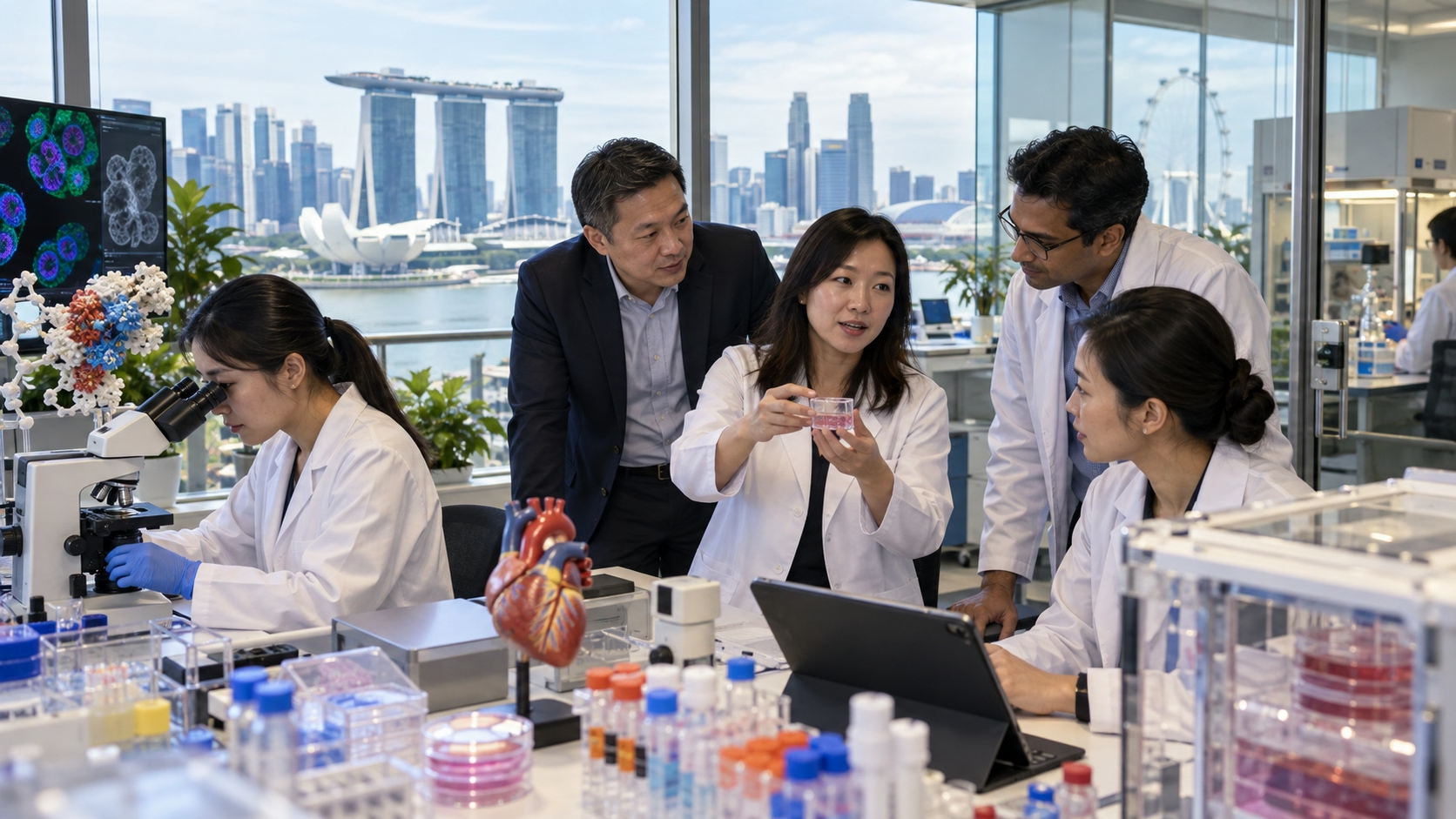
Singapore’s biotechnology landscape is undergoing a fundamental transformation. What was once primarily a manufacturing hub for global pharmaceutical giants is now emerging as a breeding ground for homegrown biotech startups developing therapies for conditions that have long defied effective treatment. The numbers tell a compelling story: the city-state has seen a fourfold increase in locally incorporated biotech companies since 2015, a trend that accelerated significantly through 2025 and into 2026. This isn’t merely a statistical curiosity—it represents a strategic shift in how Singapore positions itself within the global life sciences value chain.
The shift from “made in Singapore” to “discovered in Singapore” is being powered by a confluence of factors: world-class research institutions, supportive government investment, and a maturing venture capital ecosystem that increasingly understands the long timelines and high risks inherent to biotechnology.
Brano Therapeutics: A Case Study in Translational Science
Consider Brano Therapeutics, a spin-off from Duke-NUS Medical School that raised US$6.8 million in seed funding in May 2026. The company is developing therapies for heart failure with preserved ejection fraction (HFpEF), a condition affecting a growing segment of ageing populations with limited treatment options. What makes Brano’s story instructive is not just the funding amount, but the pathway it represents.
The science behind Brano originated from research analysing blood samples from patients to identify metabolic abnormalities associated with poorer clinical outcomes. The team discovered that the failing heart becomes less efficient at processing key nutrients, leading to accumulation of metabolic by-products that contribute to cardiac dysfunction. This is translational research in its purest form—starting with human data, identifying a biological mechanism, and building a therapeutic strategy around it.
The investment round was led by Trinity Innovation Bioventure Singapore and SEEDS, with participation from SGInnovate and Duke-NUS’ LIVE Ventures. This syndicate structure is telling: it brings together local venture capital, government-linked investment arms, and academic innovation funds—a model that Singapore has refined to bridge the notorious “valley of death” between academic discovery and commercial viability.
The Broader Startup Ecosystem
Brano is far from an isolated case. In July 2026, Tikva Allocell secured US$8 million in Series A financing to advance engineered, off-the-shelf cell therapies for solid tumours. The company’s lead candidate, TAVST01, is a CAR-T therapy targeting B7-H3-positive solid tumours, with an Investigational New Drug application planned for year-end 2026. The financing was led by Kantharos Capital, a US-based investor, indicating that Singapore biotech startups are increasingly attracting international capital.
Similarly, K2 Therapeutics launched in August 2026 with US$50 million in seed financing from MPM BioImpact—a funding scale that would have been almost unimaginable for a Singapore-based startup a decade ago. These examples illustrate a maturing ecosystem where startups are not only being founded but are also attracting the capital and talent needed to compete globally.
What’s Driving the Momentum
Several structural factors underpin this momentum. First, Singapore’s research infrastructure—anchored by A*STAR institutes and university programmes—provides a pipeline of discoveries with commercial potential. Second, government-backed investment platforms like SG Growth Capital and SEEDS have de-risked early-stage ventures for private investors. Third, the presence of global pharmaceutical companies’ regional headquarters creates a ready network of potential partners and acquirers.
The challenge ahead lies not in generating discoveries or attracting initial capital, but in scaling companies through clinical development—the most capital-intensive and time-consuming phase of drug development. Singapore’s startup ecosystem is proving it can get therapies off the ground; the next test is whether it can carry them through to approval and patient impact.