
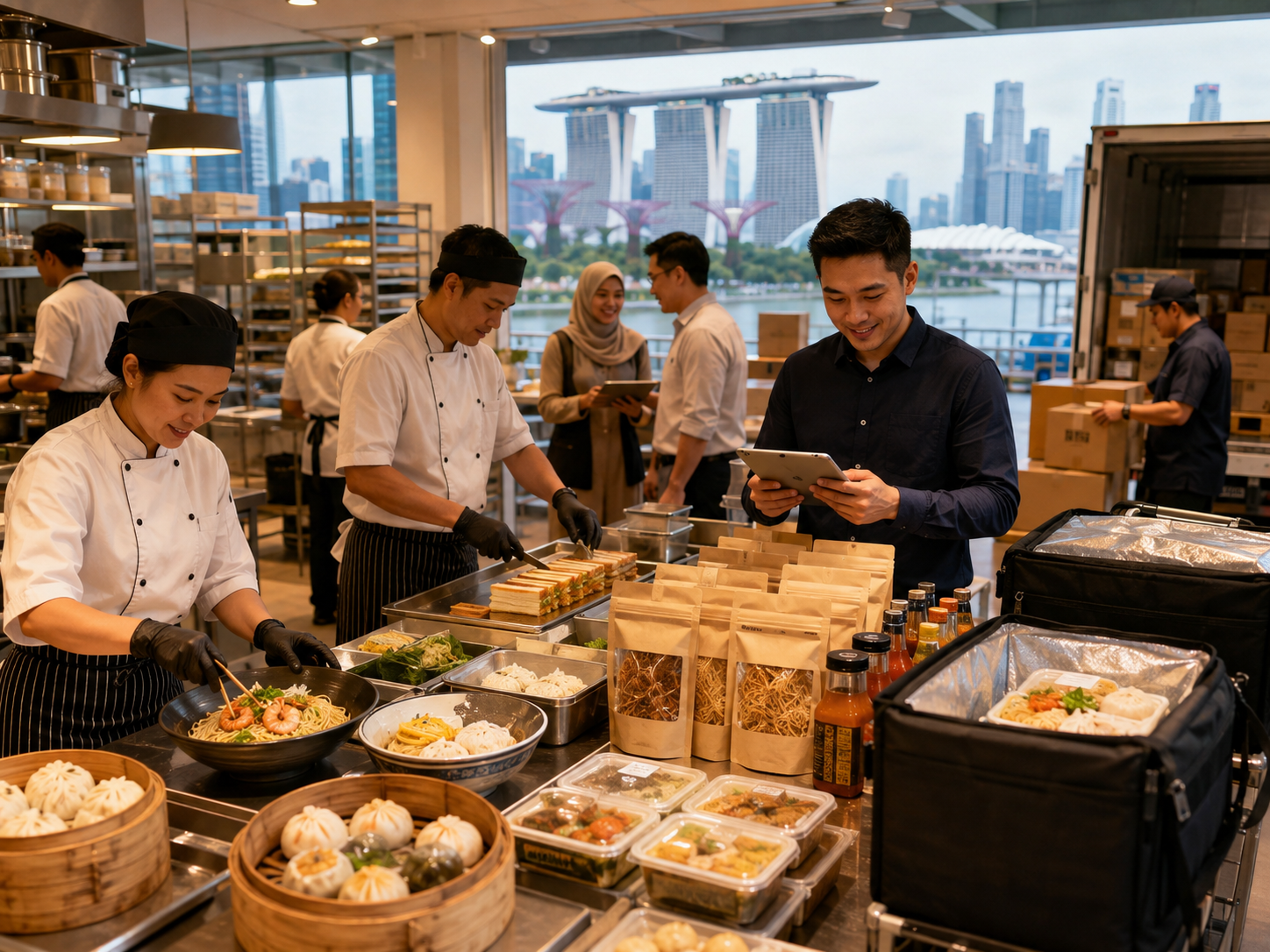
Singapore food and beverage companies are no longer satisfied with serving a domestic market of fewer than six million people. In 2026, restaurant groups, packaged food manufacturers, and beverage startups from the city-state are accelerating regional growth with sharper operational playbooks, deeper digital integration, and halal-certified product lines. This movement is reshaping Southeast Asia’s culinary economy and setting new standards for cross-border food and beverage success.
Why Singapore F&B Brands Are Pushing Beyond the City-State
The local market is saturated, and operating costs continue to climb. According to Enterprise Singapore’s 2026 Food and Beverage Industry Outlook, Singapore F&B exports and regional franchise transactions are projected to grow by 8.4 percent annually through 2028, fueled by rising demand in Indonesia, Vietnam, and the Middle East. Brands such as BreadTalk Group, Jumbo Group, and Ya Kun Kaya Toast now treat overseas outlets as primary revenue drivers rather than experimental side projects. The core advantage is Singapore’s global reputation for food safety, quality control, and culinary innovation.
Halal Certification as a Competitive Moat
Halal certification has become one of the most powerful market-entry tools for Singapore F&B firms. Indonesia, Malaysia, and the Gulf states together represent more than 400 million consumers. In 2026, Singapore halal-certified manufacturers are leveraging this credential not only to enter Muslim-majority countries but also to build trust in non-Muslim markets where halal signals hygiene and premium quality. Localization efforts extend beyond certification: brands adjust spice levels, sweetness profiles, and portion sizes while maintaining their Singaporean brand identity.
Digital-First Kitchens and Data-Driven Franchising
Technology underpins the new expansion wave. Singapore F&B groups are deploying cloud kitchens, AI-driven demand forecasting, and integrated point-of-sale systems that operate seamlessly across borders. Central kitchens in Singapore produce sauces, pastes, and frozen dim sum that are shipped to franchise partners in Jakarta, Bangkok, and Dubai. This model reduces kitchen complexity and ensures consistent product quality. Data analytics also guide real estate decisions: operators analyze foot traffic, delivery radius, and competitor density before committing to leases.
Supply Chain Resilience and Sustainable Sourcing
Resilience has become a strategic imperative after years of supply disruptions. Singapore’s “30 by 30” food security initiative, supported by the Singapore Food Agency, encourages local production of eggs, vegetables, and alternative proteins. F&B companies are diversifying suppliers across Malaysia, Thailand, and Australia while investing in cold-chain logistics. Sustainability is also influencing menus: plant-based laksa, oat milk kopi, and low-carbon packaging are increasingly common in Singapore-origin offerings.
The road ahead for Singapore F&B is defined by disciplined expansion, localized products, and digital efficiency. Companies that combine food safety credibility with deep market insight are positioning themselves as the region’s most resilient culinary exporters.