
The Shift From Coordination to Creation
For decades, a regional headquarters in Singapore meant one thing: coordination. Senior executives managed country operations, allocated capital and reported back to global boards. The innovation happened elsewhere — in Silicon Valley labs, European research centres or Japanese manufacturing campuses.
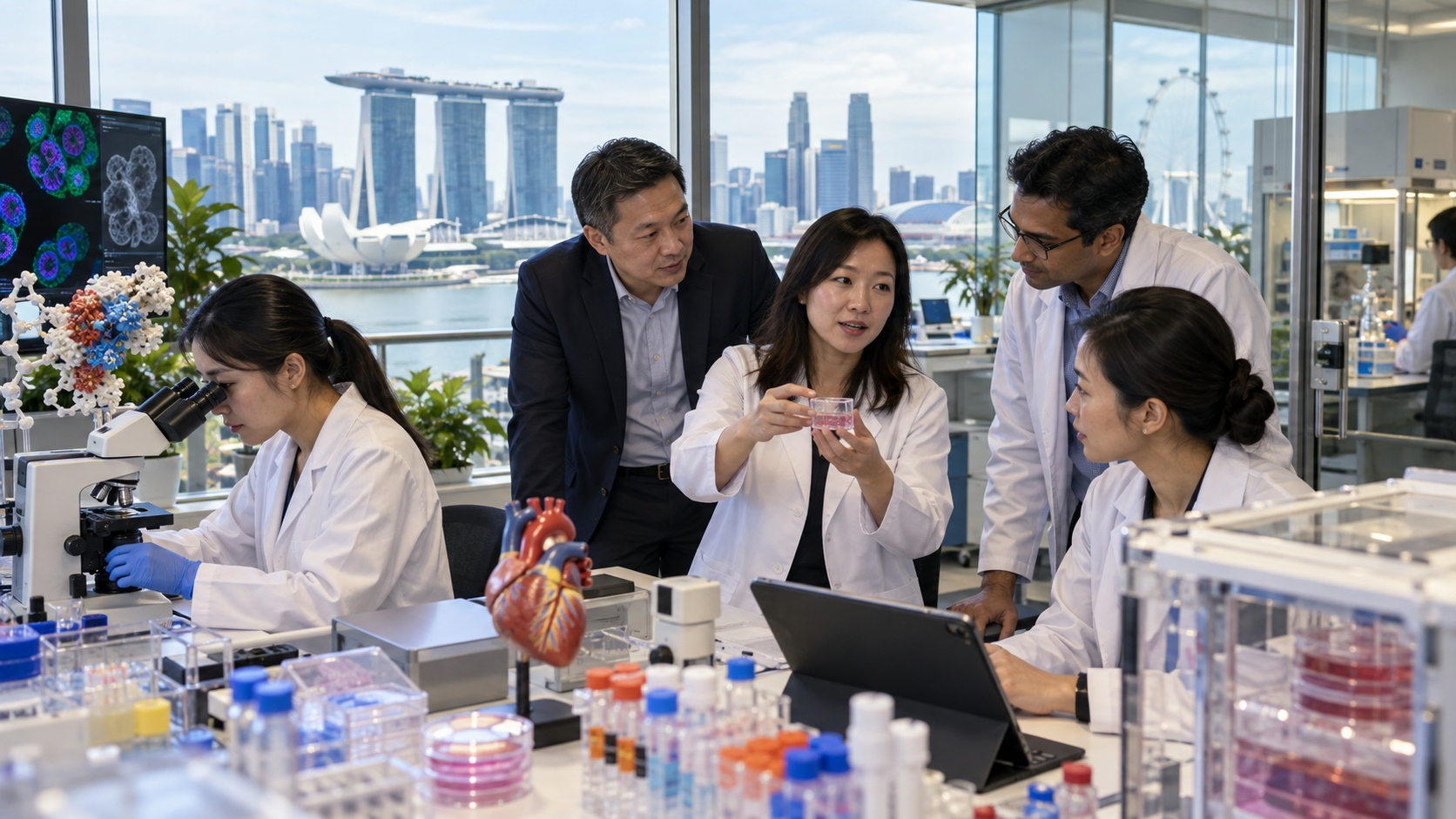
That model is fading fast. In 2026, the Singapore Economic Development Board (EDB) is deliberately rewiring the regional headquarters (RHQ) into something far more consequential: a permanent innovation hub embedded in Asia’s fastest-growing markets.
The S$37 Billion Backbone
The clearest signal of this shift is money. Singapore has committed **S$37 billion** to research, innovation and enterprise between 2026 and 2030 under the Research, Innovation and Enterprise 2030 (RIE2030) plan — a significant increase from S$28 billion in the previous five-year cycle . That funding is not scattered across isolated labs. It flows through a dense ecosystem of more than 220 incubators and accelerators, over 4,500 early-stage companies and a startup ecosystem valued at S$184 billion .
For an RHQ, that infrastructure changes the economics of innovation. A regional headquarters no longer needs to fly in engineers from headquarters to run pilots. It can plug directly into A*STAR research institutes, university labs and co-innovation platforms that sit within a four-hour flight radius of 670 million Southeast Asian consumers .
What This Looks Like on the Ground
The infrastructure is already producing tangible outcomes. In March 2026, Global Innovation Labs — the venture-building arm of Silicon Valley’s SRI International — opened a Singapore hub supported by EDB to commercialise deep-tech intellectual property across robotics, quantum, AI and sustainability . The hub does not merely coordinate regional activity; it builds companies from scientific research, using Singapore as the base for global venture creation .
Similarly, EDB’s corporate venturing push has moved the RHQ closer to the startup economy. A joint publication by Arthur D. Little and EDB in July 2026 noted that Singapore’s startup ecosystem climbed from 16th globally in 2020 to 4th in 2025, and identified advanced manufacturing, AI and healthcare as the sectors anchoring corporate-startup collaboration .
Why the RHQ Becomes the Natural Innovation Node
Three structural advantages make the RHQ the logical home for innovation in 2026.
First, decision rights. Innovation requires fast capital allocation and risk tolerance. An RHQ with regional P&L authority can approve pilots, partnerships and venture investments without waiting for a global committee.
Second, proximity to heterogeneous markets. Asia is not a single market. Product localisation for Indonesia, Vietnam, India and Japan demands continuous iteration. An RHQ that sits inside that complexity becomes a testing ground, not a reporting layer.
Third, talent density. Singapore ranks first in the region and second globally in the Global Talent Competitiveness Index . An RHQ can hire AI engineers, regulatory specialists and commercial operators in one city and deploy them across the region.
The Measurement Question
The infrastructure is in place. The harder question is measurement. EDB’s 2025 year-in-review showed S$14.2 billion in fixed asset investment commitments and S$8.9 billion in total business expenditure, but job creation fell from 18,700 in 2024 to 15,700 in 2025 . The agency has acknowledged that structural shifts make traditional job-count metrics harder to sustain.
That is precisely why the innovation-hub model matters. When an RHQ files patents, launches regional products and invests in local deep-tech ventures, its contribution shows up in capability creation rather than headcount alone. The next phase of EDB’s RHQ strategy will likely be judged on commercialisation output — not just investment dollars.