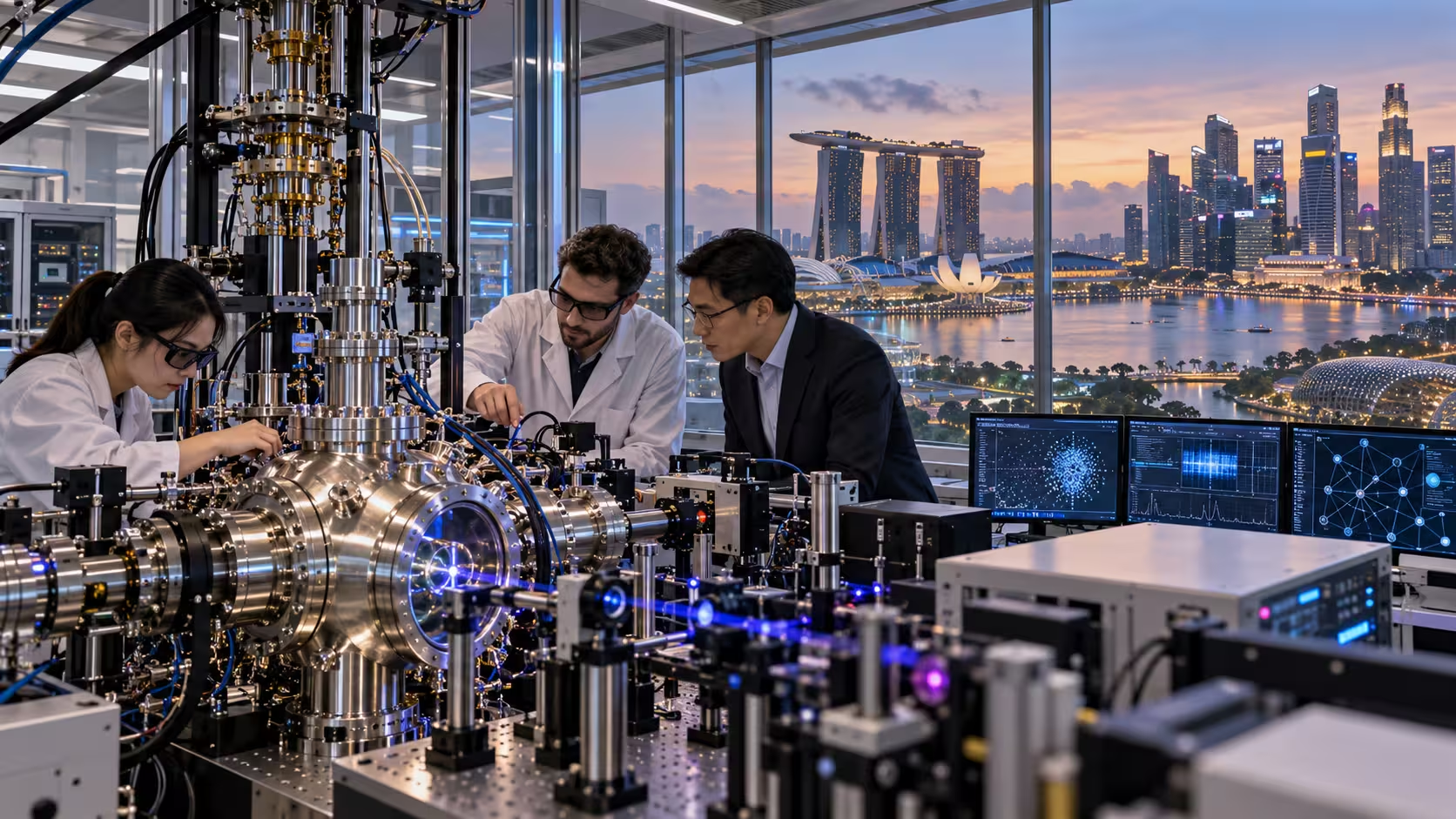
Why Singapore Has Become a Test Bed for Sustainability Innovation
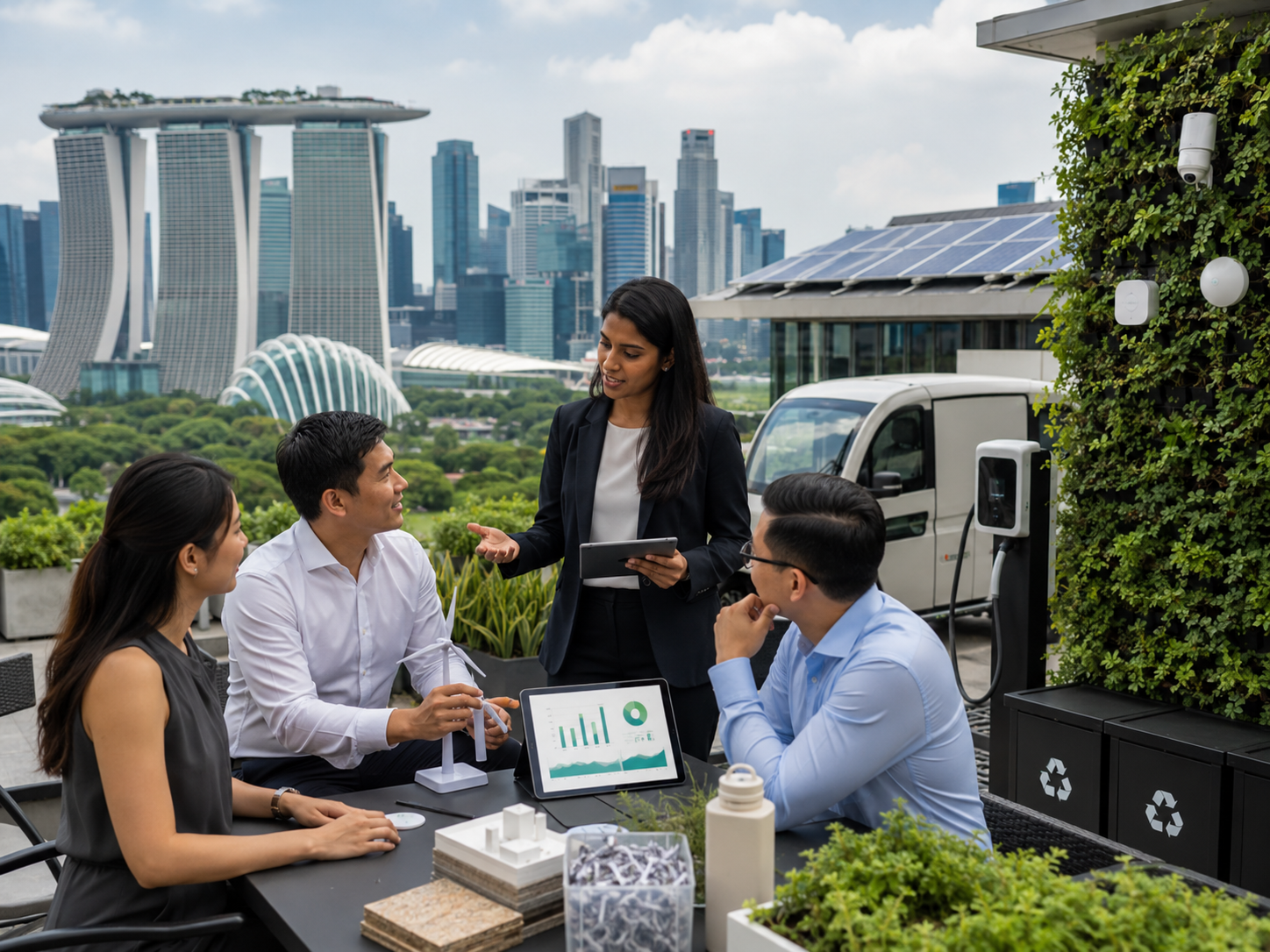
Singapore’s sustainability challenge is unusually complex. The city-state has limited land, dense infrastructure, high energy demand, and a major role as a regional business hub. These constraints have pushed the country to treat sustainability not as a branding exercise, but as an economic and technological priority. Start-ups are now central to that transition, developing tools that help businesses cut emissions, track environmental performance, reduce waste, and manage energy more intelligently.
The policy backdrop is important. Singapore’s Green Plan 2030 sets national targets around greener buildings, cleaner energy, waste reduction, and more sustainable transport. The official Green Plan portal, available at https://www.greenplan.gov.sg/, outlines the government’s long-term direction and gives start-ups a clearer market signal: sustainability solutions are not optional add-ons; they are becoming part of the country’s growth infrastructure.
Start-ups Are Turning Sustainability Into Practical Systems
Smart Buildings and Energy Efficiency
One of the strongest opportunities is building efficiency. Singapore’s tropical climate makes cooling a major source of electricity use, especially in offices, malls, hotels, and industrial facilities. Start-ups working in building analytics use sensors, artificial intelligence, and cloud dashboards to identify wasteful air-conditioning patterns, predict equipment issues, and reduce unnecessary energy consumption.
This matters because sustainability in cities is often won through operational improvements rather than dramatic visible changes. A hotel that lowers cooling waste, a logistics facility that optimises lighting, or a commercial tower that uses predictive maintenance can cut emissions without disrupting daily operations. For business owners, the appeal is clear: lower utility bills and stronger environmental reporting.
Carbon Accounting and ESG Data
A second fast-growing area is carbon measurement. Many companies in Singapore face rising pressure from investors, customers, and regulators to disclose environmental impact. Start-ups offering carbon accounting platforms help firms calculate emissions from electricity use, supply chains, transport, purchased goods, and business travel.
The most valuable platforms do more than produce a dashboard. They translate scattered operational data into decisions. For example, a food importer can compare the emissions impact of shipping routes, packaging choices, and cold-chain storage. A retail group can identify which suppliers create the largest footprint. This makes sustainability more measurable and less dependent on broad claims.
Circular Economy Solutions Are Gaining Momentum
Singapore’s limited landfill capacity makes waste innovation especially urgent. Start-ups are experimenting with recycling technologies, food-waste treatment, alternative materials, and digital marketplaces for surplus goods. The strongest circular economy models focus on commercial pain points: reducing disposal costs, recovering usable materials, and creating new revenue from waste streams.
In food and hospitality, technology can help track inventory, forecast demand, and redirect edible surplus. In construction, material recovery platforms can help identify reusable components before demolition. In packaging, start-ups are exploring reusable systems and lower-impact materials suited to urban distribution.
The Real Opportunity: Scaling Through Corporate Partnerships
Singapore’s start-up ecosystem benefits from its concentration of multinationals, financial institutions, universities, and public-sector innovation programmes. A sustainability start-up can pilot with a property developer, refine its technology with a logistics operator, then expand regionally through Singapore-based corporate networks.
This is where Singapore’s advantage becomes strategic. The domestic market is small, but it is sophisticated. A solution proven in Singapore’s dense, regulated, high-cost environment can be credible in other Asian cities facing similar climate and resource pressures.